
PreetNama
English News

McDonald’s workers sue over sexual harassment, ‘toxic’ work culture

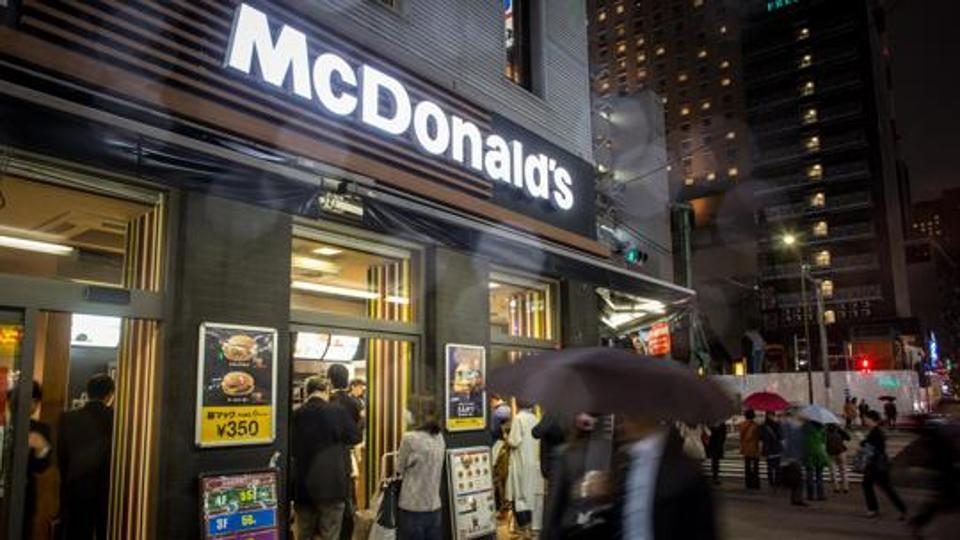
McDonald’s Corp was sued on Tuesday by workers in Michigan who accused the fast-food chain of allowing pervasive sexual harassment to flourish at its restaurants nationwide.

The proposed class action lawsuit filed in a Michigan state court accused McDonald’s of lacking policies to address sexual harassment, failing to train managers to prevent it, and retaliating against workers who complain.

It said McDonald’s “creates and permits a toxic work culture from the very top,” citing last week’s firing of Chief Executive Steve Easterbrook for having an improper consensual relationship with an employee.

Easterbrook has said he made a mistake. He has not been accused of sexual harassment.

McDonald’s said in a statement it is implementing safe-workplace training at its corporate-owned restaurants, and encouraging franchisees to do the same.

“There is a deeply important conversation around safe and respectful workplaces in communities throughout the US and around the world,” McDonald’s said, echoing comments made in August by its new chief executive, Chris Kempczinski.

Roughly 95% of McDonald’s US restaurants are franchised, and the plaintiffs’ lawyers said the Chicago-based company does not push hard enough to improve training at the franchised restaurants.

Workers have filed more than 50 similar complaints against McDonald’s and its franchisees in the United States over the last three years.

Tuesday’s lawsuit was among the first brought as a class action, representatives of the plaintiff Jenna Ries said.

Ries, 32, worked for 1-1/2 years at a franchised McDonald’s in Mason, Michigan, near the state capital of Lansing.

She said a restaurant manager there subjected her to repeated sexual epithets and contact, including by pinning her against a wall in a walk-in freezer.

“I constantly lived in fear of losing my job,” Ries told reporters on a conference call. “I needed the money.”

The lawsuit was filed on behalf of women who worked at the Mason restaurant in the last three years. It seeks improved training, added protections for employees, and more than $5 million of damages.

Ries is represented by the American Civil Liberties Union and the Time’s Up Legal Defense Fund, and supported by Fight for $15, which seeks higher wages and better treatment for workers in fast food and other industries.

The plaintiffs could find it difficult to hold McDonald’s responsible for the actions of the Michigan franchisee.

A federal appeals court in San Francisco last month said McDonald’s does not exercise enough control over franchise workers to be considered a “joint employer.”
Related posts

Millions of students return to class in Pakistan after 6-month Covid break

On Punjab

Seeking refuge in US, children fleeing danger are expelledWhen officers led them out of a detention facility near the US-Mexico border and onto a bus last month, the 12-year-old from Honduras and his 9-year-old sister believed they were going to a shelter so they could be reunited with their mother in the Midwest. They had been told to sign a paper they thought would tell the shelter they didn’t have the coronavirus, the boy said. The form was in English, a language he and his sister don’t speak. The only thing he recognized was the letters “Covid.” Instead, the bus drove five hours to an airport where the children were told to board a plane. “They lied to us,” he said. “They didn’t tell us we were going back to Honduras.” More than 2,000 unaccompanied children have been expelled since March under an emergency declaration enacted by the Trump administration, which has cited the coronavirus in refusing to provide them protections under federal anti-trafficking and asylum laws. Lawyers and advocates have sharply criticized the administration for using the global pandemic as a pretext to deport children to places of danger. No U.S. agents looked at the video the boy had saved on his cellphone showing a hooded man holding a rifle, saying his name, and threatening to kill him and his sister, weeks after the uncle caring for them was shot dead in June. And even though they were expelled under an emergency declaration citing the virus, they were never tested for COVID-19, the boy said. Three weeks after their uncle was killed, the children fled Honduras, crossing the U.S.-Mexico border alone. Under the normal process set out by U.S. law, they would have been referred to a government facility for youth and eventually placed with their mother. Instead, they were expelled on July 24 after three days in U.S. detention and now live in Honduras with another uncle who is looking to leave the country himself. U.S. Customs and Border Protection declined multiple requests for comment on the boy’s story, and U.S. Immigration and Customs Enforcement also declined, saying the children had been in Border Patrol custody until they boarded a deportation flight operated by ICE. Spokesmen for both agencies have refused to answer most questions about how they treat roughly 70,000 adults and children expelled under the emergency declaration issued in March. They have refused to say how they decide whether to expel children or where to detain them before expulsion, including in hotels where at least 150 unaccompanied children as young as 1 year old have been held. Much of what’s known about expulsions has come from the accounts of children like the 12-year-old boy, who recounted his experience to The Associated Press last week with a recall of details that makes him seem older.

On Punjab

US announces $5 mn reward for info on terrorist attack on blogger Avijit Roy

On Punjab