
PreetNama
English News

Nobel Literature Prize: Tanzanian-born novelist Abdulrazak Gurnah wins award

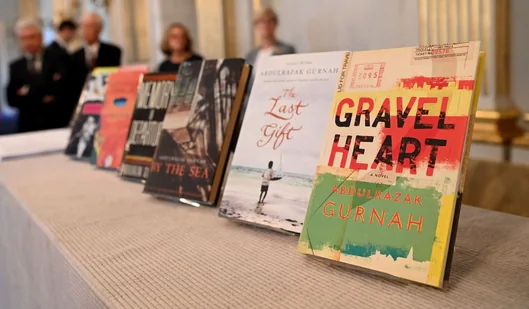
Tanzanian writer Abdulrazak Gurnah was awarded the Nobel Prize for Literature on Thursday for works that explore the legacies of imperialism on uprooted individuals.

The Swedish Academy said the award was in recognition of his “uncompromising and compassionate penetration of the effects of colonialism and the fate of the refugee in the gulf between cultures and continents”

Born in Zanzibar in 1948 and based in England, Gurnah is a professor at the University of Kent. He is the author of 10 novels, including “Paradise,” which was shortlisted for the Booker Prize in 1994.

Anders Olsson, chairman of the Nobel Committee for literature, called him “one of the world’s most prominent post-colonial writers.”

The prestigious award comes with a gold medal and 10 million Swedish kronor (over $1.14 million). The prize money comes from a bequest left by the prize’s creator, Swedish inventor Alfred Nobel, who died in 1895.

Last year’s prize went to American poet Louise Glück for what the judges described as her “unmistakable poetic voice that with austere beauty makes individual existence universal.”

Glück was a popular choice after several years of controversy. In 2018 the award was postponed after sex abuse allegations rocked the Swedish Academy, the secretive body that chooses the winners. The awarding of the 2019 prize to Austrian writer Peter Handke caused protests because of his strong support for the Serbs during the 1990s Balkan wars.

On Monday, the Nobel Committee awarded the prize in physiology or medicine to Americans David Julius and Ardem Patapoutian for their discoveries into how the human body perceives temperature and touch.

The Nobel Prize in physics was awarded Tuesday to three scientists whose work found order in seeming disorder, helping to explain and predict complex forces of nature, including expanding our understanding of climate change.

Benjamin List and David W.C. MacMillan were named as laureates of the Nobel Prize for chemistry Wednesday for finding an easier and environmentally cleaner way to build molecules that can be used to make compounds, including medicines and pesticides.

Still to come are prizes for outstanding work in the fields of peace and economics.
Related posts

South Korea orders schools to shut as Covid-19 cases spike

On Punjab

Biden taps oil from US strategic petroleum reserve. Here’s all you need to know

On Punjab

President Donald Trump announced a plan on Wednesday to send federal agents to the Democratic-run cities of Chicago and Albuquerque to crack down on violent crime in an escalation of his “law and order” theme heading into the final months before the presidential election. Trump, joined at a White House event by Attorney General William Barr, unveiled an expansion of the “Operation Legend” program to more cities in a further effort by federal officials to tackle violence. “Today I’m announcing a surge of federal law enforcement into American communities plagued by violent crime,” said Trump, a Republican who has accused Democratic mayors and governors of tolerating crime waves. “This bloodshed must end; this bloodshed will end,” he said. The program involves deploying federal law enforcement agents to assist local police in combating what the Justice Department has described as a “surge” of violent crime. Chicago Mayor Lori Lightfoot and New Mexico Governor Michelle Lujan Grisham, both Democrats, welcomed the federal help, so long as it was to assist local law enforcement with community policing and public safety. Both rejected the use of federal agents for the kind of protest crackdown seen in Portland, Oregon, saying such actions would be met with legal action. “If the Trump administration wishes to antagonize New Mexicans and Americans with authoritarian, unnecessary and unaccountable military-style ‘crackdowns,’ they have no business whatsoever in New Mexico,” Lujan Grisham said in a statement. Barr sought to differentiate the initiative from the use of federal agents from the Department of Homeland Security (DHS) to quell unrest in Portland, where local authorities have complained about the federal involvement. Barr said the law enforcement personnel from a variety of agencies will serve as “street” agents and investigators who will be working to “solve murders and take down violent gangs.” “This is different than the operations and tactical teams we use to defend against riots and mob violence,” Barr said. “We will continue to confront mob violence. But the operations we are discussing today are very different – they are classic crime fighting.” Trump hopes his “law and order” push will resonate with his political base as he trails Democrat Joe Biden in opinion polls ahead of the Nov. 3 presidential election. But the initiative risks inflaming tensions running high in many cities in the wake of the death in police custody of George Floyd, an African-American. Operation Legend involves federal agents from the FBI, US Marshals Service and other agencies partnering with local law enforcement. Lightfoot said it was not unusual for federal law enforcement to work alongside local partners, but urged Chicagoans to watch for any sign that federal agents, especially DHS officers, were stepping “out of line.” “We don’t need federal troops, we don’t need unnamed, secret federal agents,” said Lightfoot, in reference to tactics used by federal personnel in Portland. Trump has emphasized a robust policing and military approach to the protests across the United States about racial inequality after Floyd’s death in Minneapolis. The White House has sought to focus on city crime even as Trump’s approval numbers plummet in response to his handling of the coronavirus pandemic. “We are waiting for the mayor (Lightfoot), respectfully, and other mayors and governors to call us. We are ready, willing and able to go in there with great force,” Trump told reporters later on Wednesday. Operation Legend is named for LeGend Taliferro, a 4-year-old boy who was shot and killed while he slept early on June 29 in Kansas City, Missouri, according to the Department of Justice’s website.

On Punjab