
49.78 F
New York, US
April 27, 2026
PreetNama
English News

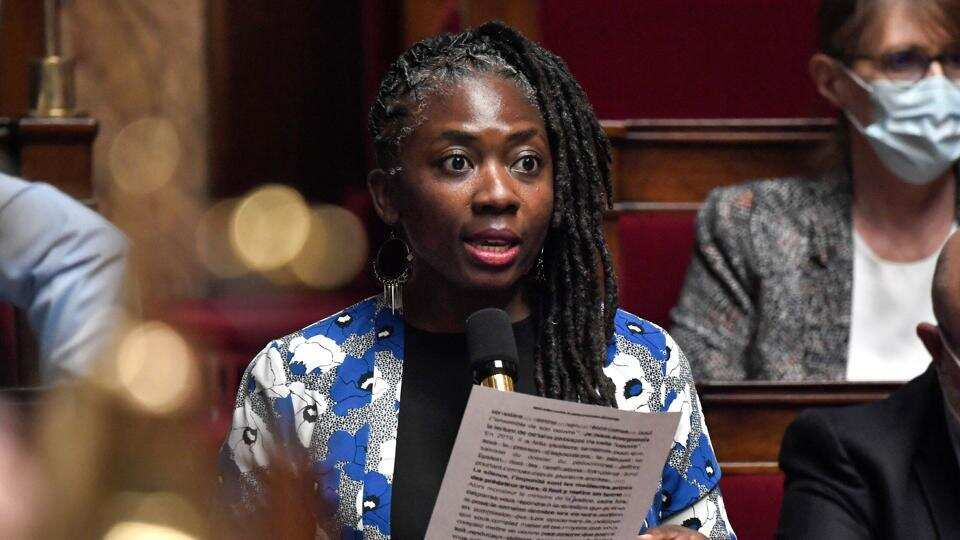
Anger after French magazine depicts Black lawmaker as slave

A French magazine apologized Saturday after portraying a Black lawmaker as a slave, as France’s government and officials across the political spectrum decried the publication.

The legislator, Danielle Obono from the far-left party Defiant France, said the publication flies in the face of those who complain that free speech is threatened by the fight against racism and sexism.

“You can still write racist s—- in a rag illustrated with a Black French parliament member repainted as a slave,” she tweeted. “The extreme right — odious, stupid and cruel.”

The magazine, Valeurs Actuelles, which caters to readers on the right and far right, apologized in a statement Saturday. Deputy editor Tagdual Denis told BFM television that the image wasn’t designed to wound Obono and denied that it was an attention-getting ploy. But he added: “What I regret is that we are always accused of racism … we are politically incorrect, it’s in our DNA.”
Anti-racism activists said the publication reflected a creeping acceptance of extremist views, fueled by social media.

Prime Minister Jean Castex from the conservative Republicans party tweeted: “This revolting publication calls for unambiguous condemnation. … The fight against racism will always transcend our differences.”

The junior minister for equality and the only Black member of the French government, Elisabeth Moreno, tweeted that “I don’t share Danielle Obono’s ideas, but today I offer her all my support.” A similar refrain came from politicians from multiple parties, including the treasurer of Marine Le Pen’s far-right National Rally party.

Obono, who was born in the former French colony of Gabon, said later on BFM that “I hurt for my republic, I hurt for my France.” She called the publication a political attack on her and others who fight against “the racism, stigmatization that millions of our compatriots are subjected to.”

France saw multiple protests in June and July against racial injustice and police brutality inspired by the Black Lives Matter movement and George Floyd’s death at the knee of a policeman in the United States.

French President Emmanuel Macron, a centrist who raised eyebrows when he gave an interview to Valeurs Actuelles last year, has pledged to root out racism. But he also insisted that France will not take down statues of figures linked to the colonial era or the slave trade, as has happened in other countries in recent months.
Related posts

Trump outstripping Obama on pace of executive orders

On Punjab

Seeking refuge in US, children fleeing danger are expelledWhen officers led them out of a detention facility near the US-Mexico border and onto a bus last month, the 12-year-old from Honduras and his 9-year-old sister believed they were going to a shelter so they could be reunited with their mother in the Midwest. They had been told to sign a paper they thought would tell the shelter they didn’t have the coronavirus, the boy said. The form was in English, a language he and his sister don’t speak. The only thing he recognized was the letters “Covid.” Instead, the bus drove five hours to an airport where the children were told to board a plane. “They lied to us,” he said. “They didn’t tell us we were going back to Honduras.” More than 2,000 unaccompanied children have been expelled since March under an emergency declaration enacted by the Trump administration, which has cited the coronavirus in refusing to provide them protections under federal anti-trafficking and asylum laws. Lawyers and advocates have sharply criticized the administration for using the global pandemic as a pretext to deport children to places of danger. No U.S. agents looked at the video the boy had saved on his cellphone showing a hooded man holding a rifle, saying his name, and threatening to kill him and his sister, weeks after the uncle caring for them was shot dead in June. And even though they were expelled under an emergency declaration citing the virus, they were never tested for COVID-19, the boy said. Three weeks after their uncle was killed, the children fled Honduras, crossing the U.S.-Mexico border alone. Under the normal process set out by U.S. law, they would have been referred to a government facility for youth and eventually placed with their mother. Instead, they were expelled on July 24 after three days in U.S. detention and now live in Honduras with another uncle who is looking to leave the country himself. U.S. Customs and Border Protection declined multiple requests for comment on the boy’s story, and U.S. Immigration and Customs Enforcement also declined, saying the children had been in Border Patrol custody until they boarded a deportation flight operated by ICE. Spokesmen for both agencies have refused to answer most questions about how they treat roughly 70,000 adults and children expelled under the emergency declaration issued in March. They have refused to say how they decide whether to expel children or where to detain them before expulsion, including in hotels where at least 150 unaccompanied children as young as 1 year old have been held. Much of what’s known about expulsions has come from the accounts of children like the 12-year-old boy, who recounted his experience to The Associated Press last week with a recall of details that makes him seem older.

On Punjab

Decision to suspend UK parliament was ‘unlawful’: Supreme Court

On Punjab