
PreetNama
English News

Progress on health equity is stalling across Europe: WHO

World Health Organisation’s (WHO) first-ever health equity status report reveals that health inequities in many of the 53 countries in the WHO European Region remain either the same or have worsened despite attempts by governments to address them.

The report newly identifies five key risk factors that are holding many children, young people, women and men back from achieving good health and leading safe and decent lives.

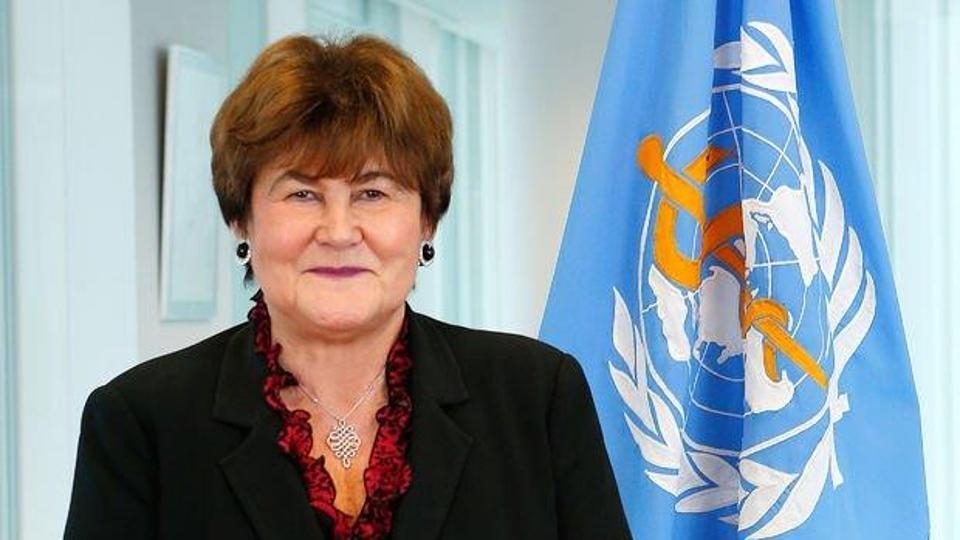
“For the first time, the health equity status report provides governments with the data and tools they need to tackle health inequities and produce visible results in a relatively short period of time, even within the lifetime of a national government of 4 years,” says Dr Zsuzsanna Jakab, WHO regional director for Europe.

The range of policies outlined in the report stimulates both sustainable development and economic growth. Reducing inequities by 50% would produce financial benefits to countries ranging from 0.3% to 4.3% of gross domestic product (GDP), the report finds.

There is a significant health divide among rich and the poor population.

While average life expectancy across the region increased to 82 years for women and 76.2 years for men by 2016, there are still significant health inequities between social groups: a woman’s life expectancy is cut by up to 7 years and a man’s by up to 15 years if they are in the most disadvantaged groups.

Almost twice as many women and men in the least affluent 20%of the population report illnesses that limit their freedom to carry out daily activities, compared to those in the most affluent 20%.

In the most deprived areas, 4% more babies do not survive their first year compared to babies born in more affluent areas.

Health gaps between socioeconomic groups widen as people age, with 6% more girls and 5% more boys report poor health in the least affluent households compared to those in the most affluent households.

This gap rises to 19% more women and 17% more men during working age, and peaks among those aged 65 and over with 22% more women and 21% more men reporting poor health in the least affluent households compared to the most affluent households.

Where you live influences how long and how well you are able to live. Trends show that in almost 75% of countries surveyed, the differences in life expectancy between the most and least advantaged regions have not changed in over a decade, and in some cases have worsened.

“This report explains how we can achieve health equity and bring positive change into the lives of all people in our Region. Through this effort we can achieve the Sustainable Development Goals, particularly goal 10 on reducing inequity – the only goal which is not improving in our region,” says Dr Jakab.
Related posts

Why you need to start with green tea right away

On Punjab

NRA’s gun rights message lingers in US despite legal, money woes

On Punjab

President Donald Trump announced a plan on Wednesday to send federal agents to the Democratic-run cities of Chicago and Albuquerque to crack down on violent crime in an escalation of his “law and order” theme heading into the final months before the presidential election. Trump, joined at a White House event by Attorney General William Barr, unveiled an expansion of the “Operation Legend” program to more cities in a further effort by federal officials to tackle violence. “Today I’m announcing a surge of federal law enforcement into American communities plagued by violent crime,” said Trump, a Republican who has accused Democratic mayors and governors of tolerating crime waves. “This bloodshed must end; this bloodshed will end,” he said. The program involves deploying federal law enforcement agents to assist local police in combating what the Justice Department has described as a “surge” of violent crime. Chicago Mayor Lori Lightfoot and New Mexico Governor Michelle Lujan Grisham, both Democrats, welcomed the federal help, so long as it was to assist local law enforcement with community policing and public safety. Both rejected the use of federal agents for the kind of protest crackdown seen in Portland, Oregon, saying such actions would be met with legal action. “If the Trump administration wishes to antagonize New Mexicans and Americans with authoritarian, unnecessary and unaccountable military-style ‘crackdowns,’ they have no business whatsoever in New Mexico,” Lujan Grisham said in a statement. Barr sought to differentiate the initiative from the use of federal agents from the Department of Homeland Security (DHS) to quell unrest in Portland, where local authorities have complained about the federal involvement. Barr said the law enforcement personnel from a variety of agencies will serve as “street” agents and investigators who will be working to “solve murders and take down violent gangs.” “This is different than the operations and tactical teams we use to defend against riots and mob violence,” Barr said. “We will continue to confront mob violence. But the operations we are discussing today are very different – they are classic crime fighting.” Trump hopes his “law and order” push will resonate with his political base as he trails Democrat Joe Biden in opinion polls ahead of the Nov. 3 presidential election. But the initiative risks inflaming tensions running high in many cities in the wake of the death in police custody of George Floyd, an African-American. Operation Legend involves federal agents from the FBI, US Marshals Service and other agencies partnering with local law enforcement. Lightfoot said it was not unusual for federal law enforcement to work alongside local partners, but urged Chicagoans to watch for any sign that federal agents, especially DHS officers, were stepping “out of line.” “We don’t need federal troops, we don’t need unnamed, secret federal agents,” said Lightfoot, in reference to tactics used by federal personnel in Portland. Trump has emphasized a robust policing and military approach to the protests across the United States about racial inequality after Floyd’s death in Minneapolis. The White House has sought to focus on city crime even as Trump’s approval numbers plummet in response to his handling of the coronavirus pandemic. “We are waiting for the mayor (Lightfoot), respectfully, and other mayors and governors to call us. We are ready, willing and able to go in there with great force,” Trump told reporters later on Wednesday. Operation Legend is named for LeGend Taliferro, a 4-year-old boy who was shot and killed while he slept early on June 29 in Kansas City, Missouri, according to the Department of Justice’s website.

On Punjab