
75.67 F
New York, US
September 18, 2026
PreetNama
English News

Lok Sabha passes Appropriation Bill, completing two-thirds of budget exercise

The Lok Sabha on Wednesday passed the Appropriation Bill 2021-22, authorising the government to draw funds from the Consolidated Fund of India for its working as well as implementation of its programmes and schemes.

This completes two-thirds of the exercise for approval of the Budget for 2021-22.

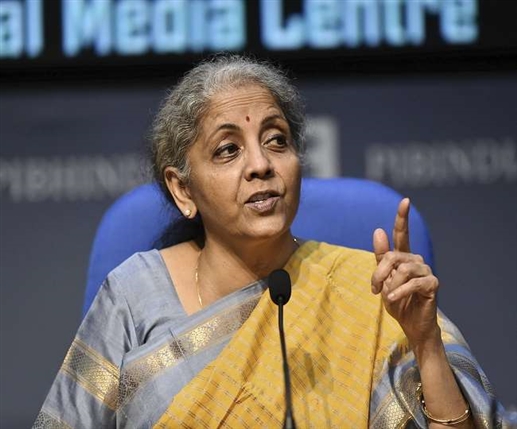
The Appropriation Bill authorising payment and appropriation of specified sums from the Consolidated Fund of India for 2021-22 was introduced by Finance Minister Nirmala Sitharaman.

The bill was later approved by voice vote.

The Lok Sabha earlier discussed demands for grants of different ministries, including railways, education and health.

Speaker Om Birla later applied the guillotine, after which all the outstanding demands for grants, whether discussed or not, were put to vote at once and passed.

After that, the Appropriation Bill was taken into consideration and passed by the lower house of Parliament.

The Lok Sabha will now discuss the Finance Bill, which essentially contains the government’s tax proposals.

Once the Finance Bill is passed, the budget exercise is complete.

Both appropriation and finance bills are classified as money bills which do not require the explicit consent of the Rajya Sabha. The upper house only discusses them and returns the bills.

After passing the Finance Bill, it enters the statute as the Finance Act. Thus, the final Budget gets approved.

While guillotine literally is a large, weighted blade used for executing a condemned person, in legislative parlance, to ”guillotine” means to bunch together and fast-track the passage of financial business.

It is a fairly common procedural exercise in Lok Sabha during the Budget Session.

After the Budget is presented, Parliament goes into recess for about three weeks, during which the House Standing Committees examine demands for grants for various ministries, and prepare reports. After Parliament reassembles, time is allotted for discussions on the demands for grants of some ministries.
Related posts

Biden has surrendered to radical mob by naming Kamala Harris as running mate: Trump Campaign

On Punjab

President Donald Trump announced a plan on Wednesday to send federal agents to the Democratic-run cities of Chicago and Albuquerque to crack down on violent crime in an escalation of his “law and order” theme heading into the final months before the presidential election. Trump, joined at a White House event by Attorney General William Barr, unveiled an expansion of the “Operation Legend” program to more cities in a further effort by federal officials to tackle violence. “Today I’m announcing a surge of federal law enforcement into American communities plagued by violent crime,” said Trump, a Republican who has accused Democratic mayors and governors of tolerating crime waves. “This bloodshed must end; this bloodshed will end,” he said. The program involves deploying federal law enforcement agents to assist local police in combating what the Justice Department has described as a “surge” of violent crime. Chicago Mayor Lori Lightfoot and New Mexico Governor Michelle Lujan Grisham, both Democrats, welcomed the federal help, so long as it was to assist local law enforcement with community policing and public safety. Both rejected the use of federal agents for the kind of protest crackdown seen in Portland, Oregon, saying such actions would be met with legal action. “If the Trump administration wishes to antagonize New Mexicans and Americans with authoritarian, unnecessary and unaccountable military-style ‘crackdowns,’ they have no business whatsoever in New Mexico,” Lujan Grisham said in a statement. Barr sought to differentiate the initiative from the use of federal agents from the Department of Homeland Security (DHS) to quell unrest in Portland, where local authorities have complained about the federal involvement. Barr said the law enforcement personnel from a variety of agencies will serve as “street” agents and investigators who will be working to “solve murders and take down violent gangs.” “This is different than the operations and tactical teams we use to defend against riots and mob violence,” Barr said. “We will continue to confront mob violence. But the operations we are discussing today are very different – they are classic crime fighting.” Trump hopes his “law and order” push will resonate with his political base as he trails Democrat Joe Biden in opinion polls ahead of the Nov. 3 presidential election. But the initiative risks inflaming tensions running high in many cities in the wake of the death in police custody of George Floyd, an African-American. Operation Legend involves federal agents from the FBI, US Marshals Service and other agencies partnering with local law enforcement. Lightfoot said it was not unusual for federal law enforcement to work alongside local partners, but urged Chicagoans to watch for any sign that federal agents, especially DHS officers, were stepping “out of line.” “We don’t need federal troops, we don’t need unnamed, secret federal agents,” said Lightfoot, in reference to tactics used by federal personnel in Portland. Trump has emphasized a robust policing and military approach to the protests across the United States about racial inequality after Floyd’s death in Minneapolis. The White House has sought to focus on city crime even as Trump’s approval numbers plummet in response to his handling of the coronavirus pandemic. “We are waiting for the mayor (Lightfoot), respectfully, and other mayors and governors to call us. We are ready, willing and able to go in there with great force,” Trump told reporters later on Wednesday. Operation Legend is named for LeGend Taliferro, a 4-year-old boy who was shot and killed while he slept early on June 29 in Kansas City, Missouri, according to the Department of Justice’s website.

On Punjab

US ambassador congratulates PM Modi for receiving Legion of Merit

On Punjab