
56.59 F
New York, US
March 10, 2026
PreetNama
English News

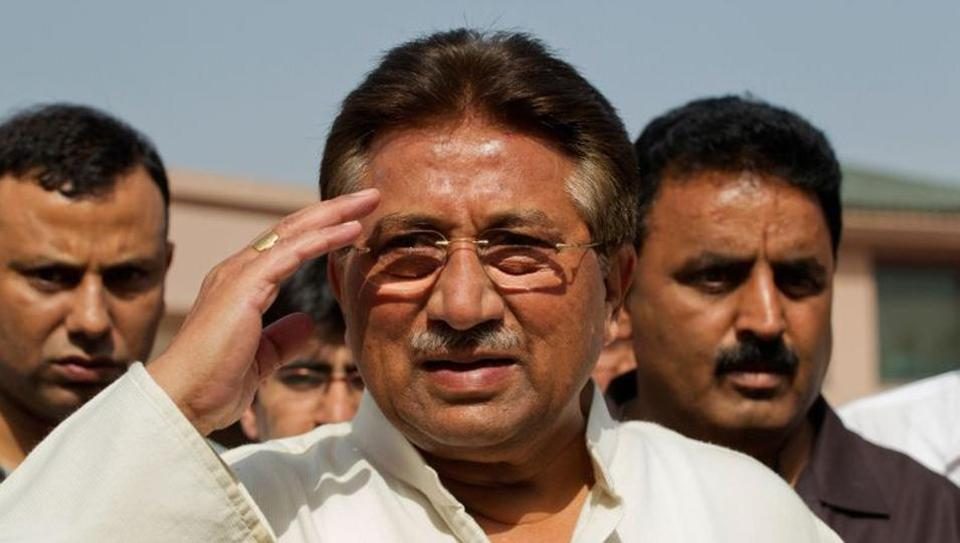
Musharraf challenges special court’s verdict in high treason case: Report

Pakistan’s former military dictator Gen (retd) Pervez Musharraf on Friday filed a petition in a court against the special court’s verdict convicting him of high treason and sentencing him to death, according to media reports.

Last week, the special court in Islamabad sentenced 76-year-old Musharraf to death in absentia for high treason following a six-year legal case.

The 86 page-long petition, filed by Advocate Azhar Siddique in the Lahore High Court (LHC) on Friday on Musharraf’s behalf, named the federal government and others as respondents, Dawn News reported.

The petition highlighted that the “judgement contained a mix of anomalies and contradictory statements”. It added that the special court “rapidly and hurriedly wrapped up the trial which was far from conclusion”, the report said.

The petition stated that the special court “has not taken into consideration that no actions detrimental to national interest were taken by the applicant” as “no offence of high treason is made out from the evidence presented against him (Musharraf) before the special court”.

The full bench, chaired by Justice Mazahir Ali Akbar Naqvi, will hear the petition on January 9, 2020.

The former president has prayed to the High Court to suspend the decision, the Express Tribune reported.

Musharraf had earlier moved the LHC against the constitution of the special court.

He filed an application in the LHC, urging it to halt the special court from sentencing him in absentia.Three days after he had filed the petition, Musharraf, who is currently in Dubai where he is seeking treatment for multiple diseases, was handed the death penalty by the special court in Islamabad after the three-member bench convicted him in the treason case.

Musharraf suspended the Constitution in 2007 and announce emergency which under Article 6 of the Constitution of Pakistan is an act of treason punishable with death.

He is the first military ruler to receive the capital punishment in Pakistan’s history. His sentencing was highly significant in Pakistan where the powerful military has ruled the country for nearly half of its 72-year history.

He came to power in 1999 by toppling the government of then Prime Minister Nawaz Sharif and ruled until 2008. He has 30 days to file appeal in the apex court.

Related posts

Seeking refuge in US, children fleeing danger are expelledWhen officers led them out of a detention facility near the US-Mexico border and onto a bus last month, the 12-year-old from Honduras and his 9-year-old sister believed they were going to a shelter so they could be reunited with their mother in the Midwest. They had been told to sign a paper they thought would tell the shelter they didn’t have the coronavirus, the boy said. The form was in English, a language he and his sister don’t speak. The only thing he recognized was the letters “Covid.” Instead, the bus drove five hours to an airport where the children were told to board a plane. “They lied to us,” he said. “They didn’t tell us we were going back to Honduras.” More than 2,000 unaccompanied children have been expelled since March under an emergency declaration enacted by the Trump administration, which has cited the coronavirus in refusing to provide them protections under federal anti-trafficking and asylum laws. Lawyers and advocates have sharply criticized the administration for using the global pandemic as a pretext to deport children to places of danger. No U.S. agents looked at the video the boy had saved on his cellphone showing a hooded man holding a rifle, saying his name, and threatening to kill him and his sister, weeks after the uncle caring for them was shot dead in June. And even though they were expelled under an emergency declaration citing the virus, they were never tested for COVID-19, the boy said. Three weeks after their uncle was killed, the children fled Honduras, crossing the U.S.-Mexico border alone. Under the normal process set out by U.S. law, they would have been referred to a government facility for youth and eventually placed with their mother. Instead, they were expelled on July 24 after three days in U.S. detention and now live in Honduras with another uncle who is looking to leave the country himself. U.S. Customs and Border Protection declined multiple requests for comment on the boy’s story, and U.S. Immigration and Customs Enforcement also declined, saying the children had been in Border Patrol custody until they boarded a deportation flight operated by ICE. Spokesmen for both agencies have refused to answer most questions about how they treat roughly 70,000 adults and children expelled under the emergency declaration issued in March. They have refused to say how they decide whether to expel children or where to detain them before expulsion, including in hotels where at least 150 unaccompanied children as young as 1 year old have been held. Much of what’s known about expulsions has come from the accounts of children like the 12-year-old boy, who recounted his experience to The Associated Press last week with a recall of details that makes him seem older.

On Punjab

New York begins Andrew Cuomo impeachment investigation

On Punjab

Russian blogger sentenced to five years over ‘extremist’ tweet

On Punjab